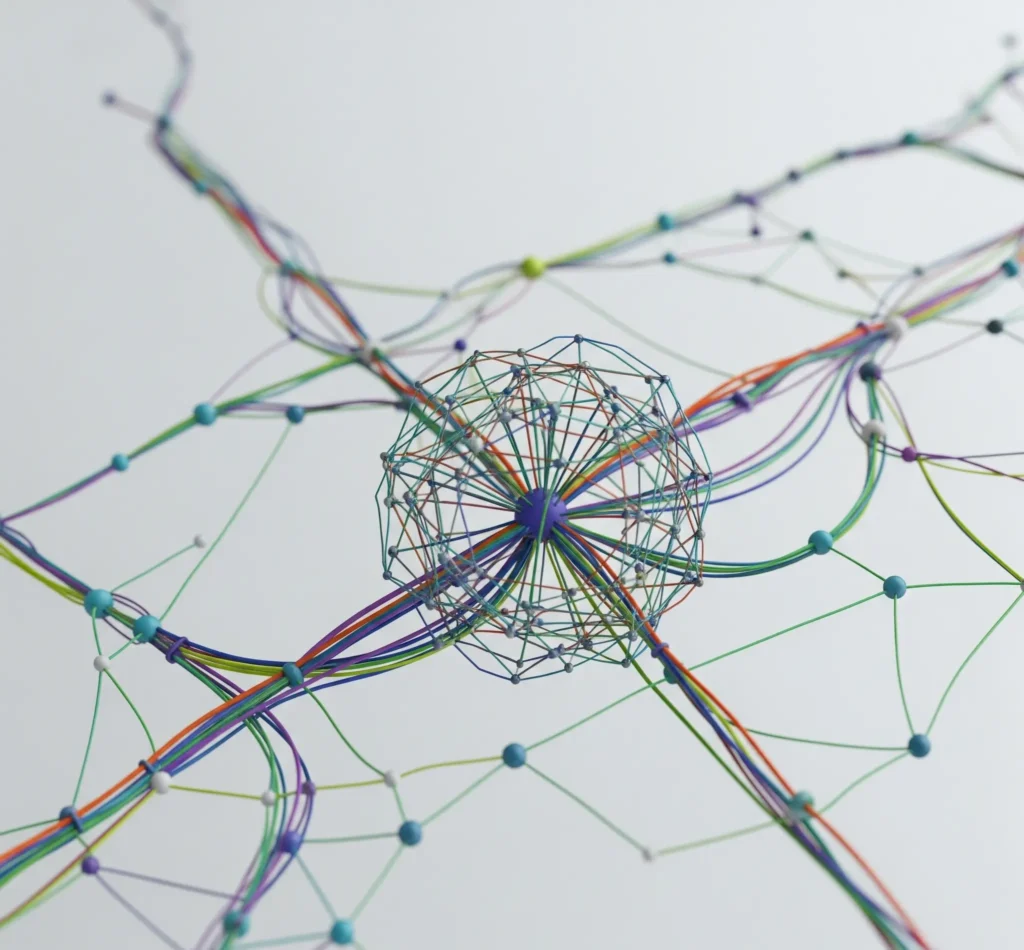
Understanding Deep Learning: The Brain Behind Modern AI
Deep learning is akin to training an artificial brain. Imagine trying to teach a child to recognize animals in pictures; at first, they might struggle, but with enough examples, they learn to identify even subtle differences. Similarly, deep learning, a branch of machine learning, trains computer systems to recognize intricate patterns in data, such as text, images, and videos. Just as the human brain becomes more efficient with experience, deep learning models improve their accuracy with more data and computational power. However, like a child needing more energy to focus on harder problems, deep learning requires substantial computing power, which comes at a high cost (Neil C. Thompson et al., 2020).
The Rise of Deep Learning: From Data to Dominance
Deep learning’s ascent began in the early 2000s, much like a new tool in an engineer’s toolkit, as software companies started to gather massive amounts of data that needed analysis (Forbes 2016). Picture a growing library with endless volumes of books; the more books you have, the more you need a sophisticated system to find exactly what you’re looking for. Similarly, as companies like Google and Amazon amassed data through search engines and e-commerce platforms, the need for deep learning to sift through and make sense of this data became crucial for product improvement and business scalability.
Deep Learning Methods: Building Blocks of Artificial Brains
Creating a deep learning model is like constructing a multi-layered neural network, which functions as an artificial brain. Here are four key methods used to train these models, each serving a unique purpose in the learning process:
- Learning Rate Decay: Think of learning rate decay as gradually slowing down while approaching a destination. Initially, you drive quickly on an open highway (high learning rate) to cover more distance rapidly. As you near your destination, you slow down to navigate the final turns carefully (low learning rate). In deep learning, this technique reduces the learning rate over time during training, allowing the model to fine-tune its understanding and converge to an optimal solution.
- Transfer Learning: Transfer learning is like transferring your knowledge from riding a bicycle to riding a motorcycle. You already know how to balance and steer, so instead of learning from scratch, you apply this knowledge to the new task. In deep learning, a model trained on one task can be adapted for another related task, making it efficient when data or resources for the new task are limited.
- Training from Scratch: Training from scratch is like teaching someone to play an instrument with no prior musical experience. They start with the basics, learning each note and chord from the ground up. Similarly, in deep learning, this approach involves training a neural network from the beginning without using pre-existing models, allowing the network to develop its feature recognition capabilities directly from the raw data.
- Dropout: Dropout can be compared to studying for an exam by selectively ignoring certain topics temporarily. This forces you to understand the remaining material more thoroughly. In neural networks, dropout randomly “drops out” neurons during training, encouraging the model to learn more robust features by preventing it from relying too heavily on any one part of the network.
Real-World Applications of Deep Learning: From Theory to Practice
Deep learning has moved from the realm of theoretical models to real-world applications that impact our daily lives. Here’s how deep learning is driving innovation across various domains:
Computer Vision: Teaching Machines to See
Imagine teaching a robot to see the world as you do. Deep learning makes this possible by enabling computer vision systems to perform tasks like object recognition and detection. For instance, just as you can recognize a familiar face in a crowd, deep learning models trained on vast image datasets can accurately identify and locate objects in photos or videos. This technology is pivotal in areas such as surveillance, where systems need to monitor environments, or in self-driving cars, where the vehicle must identify obstacles and navigate safely. Facial recognition, which verifies identities based on facial features, is another prime example of deep learning’s impact in this field.
Natural Language Processing (NLP): Giving Machines the Gift of Language
Natural Language Processing is like teaching a machine to understand and speak human languages. Deep learning has revolutionized NLP, enabling systems to grasp the nuances of text and speech. For example, sentiment analysis works like a seasoned critic interpreting the tone of a review—deep learning models can analyze text data to determine whether the sentiment is positive, negative, or neutral. Another significant application is language translation, where deep learning enables accurate conversion of text from one language to another, as seen in services like Google Translate. NLP is essential for chatbots, virtual assistants, and software localization.
Speech Recognition: Turning Words into Actions
Speech recognition can be compared to a secretary taking dictation and then accurately typing out the spoken words. Deep learning algorithms transcribe spoken language into text and understand spoken commands, forming the backbone of virtual assistants like Siri, Alexa, and Google Assistant. These systems need to interpret the nuances of human speech, which varies in accent, speed, and context. Deep learning makes this possible, allowing these virtual assistants to respond accurately to user queries and commands. Additionally, this technology powers transcription services used by platforms like Netflix and YouTube, converting spoken content into written form for accessibility.
Recommendation Systems: The Art of Personalization
Imagine walking into a bookstore where the clerk knows exactly what books you’ll love based on your previous purchases. This is what recommendation systems do, powered by deep learning. Platforms like Amazon, Netflix, and Spotify analyze your past behaviors and preferences to suggest products, movies, or songs you might enjoy. Deep learning enables these systems to sift through massive amounts of data, identifying patterns and making personalized recommendations that enhance user satisfaction and engagement.
Autonomous Vehicles: Driving Into the Future
Autonomous vehicles are like highly skilled chauffeurs who never tire and can react instantly to changes in their surroundings. Deep learning is the brain behind these vehicles, helping them understand and interpret their environment in real-time. Self-driving cars use deep learning to recognize road signs, traffic lights, pedestrians, and other vehicles, making split-second decisions necessary for safe navigation. This technology is expected to mature by 2035, potentially transforming the way we think about transportation (Verdict, 2023).